
Marine Life & Conservation
Best snorkeling in Hurghada: where to go, what you'll see and what it costs
The best snorkeling from Hurghada is on the offshore reefs you reach by boat: the reefs around Giftun island, Abu Ramada and Gota Abu Ramada, and Dolphin House at Shaab El Erg, where wild dolphins come to rest. The sea is about 21–29 °C through the year. With us, a snorkeling day is €35, the Orange Bay trip €40 including the entrance fee, and a private dolphin speedboat €200 for up to six people.
By 71 Guardians · Published 02 Nov 2026
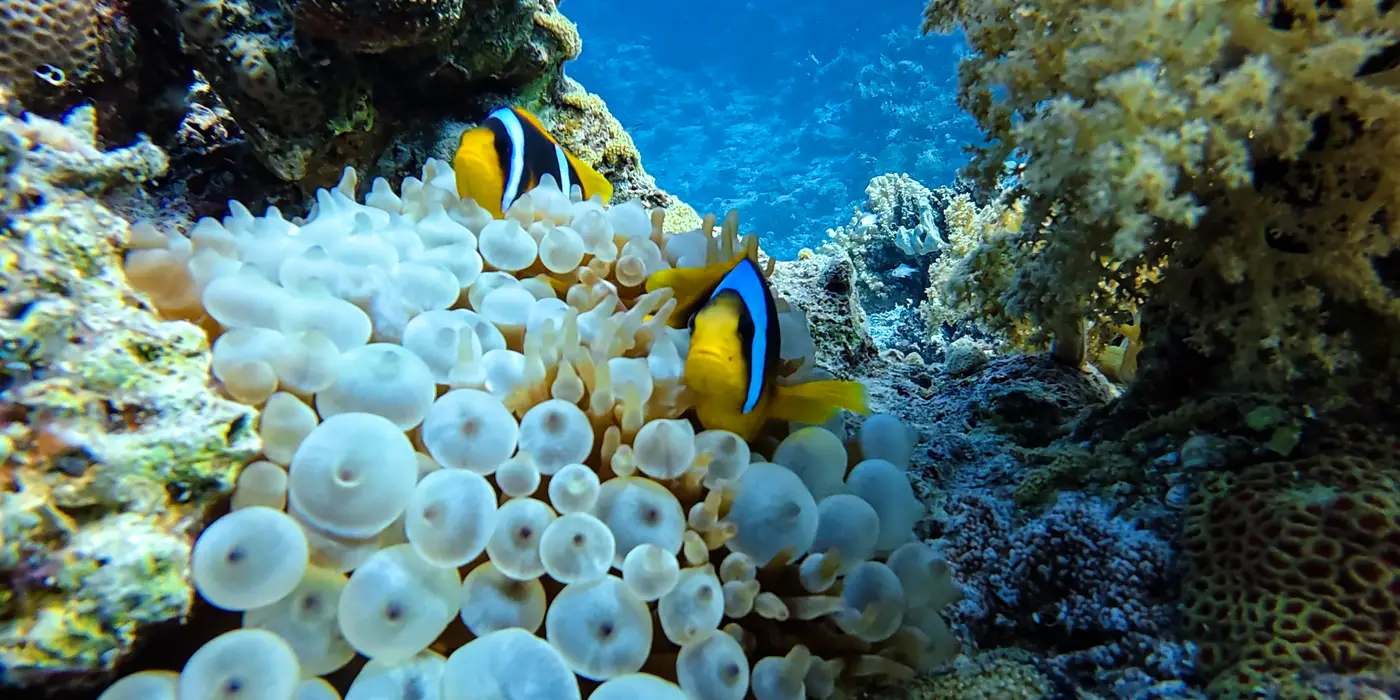
Where are the best places to snorkel in Hurghada?
The reefs worth a snorkeling trip are offshore, so plan on a boat. Most full-day trips from Hurghada stop at two or three of the spots below; the skipper picks them on the day for the wind and the sea.
| Spot | Where | What it's like | Known for | How to go with us |
|---|---|---|---|---|
| Gota Abu Ramada ("the Aquarium") | South-east of Hurghada, under 30 minutes by boat | Coral blocks, low current (under 1 knot) | Big brain corals, turtles, shoals of goatfish and young barracuda; eagle rays now and then | Snorkeling trip, €35 |
| Abu Ramada (south, north) | Abu Ramada island, south of Giftun | A plateau on the north side, a drift route with low current on the south | Reefs rated beginner-level on the south side | Snorkeling trip, €35 |
| Giftun island reefs (e.g. Banana Reef, Shaab Sabina, El Aruk Giftun) | The channel between Hurghada and Giftun; Banana Reef is under 30 minutes by boat | Reefs, coral gardens and pinnacles | Beginner-level reefs in the Giftun channel | Snorkeling trip, €35, or Orange Bay, €40 |
| Orange Bay | A beach on Giftun island | Beach time plus snorkel stops on nearby reefs | A beach day with snorkeling | Orange Bay trip, €40 incl. entrance fee |
| Dolphin House (Shaab El Erg) | North of Hurghada, towards El Gouna | A reef with a lagoon | A resting area for wild dolphins | Private dolphin speedboat, €200 per boat |
| El Fanous East | North of Hurghada, about 45 minutes by boat | Reef, no current listed | Small reef creatures; dolphins are sometimes met here | Ask us |
| Makadi Bay Reef | Makadi Bay, from the shore | Reef 1–2 m under the surface after a walk of about 100 m through the lagoon | A quiet shore reef with a reef wall | On your own from the beach |
Boat times and conditions come from public dive-site records; they change with the boat and the weather. See all sites on our dive-site map.
What will you see when snorkeling in Hurghada?
Expect hard corals in shallow water and a lot of reef fish; turtles, rays and dolphins are possible but never certain.
- Corals: Gota Abu Ramada is known for very large brain corals on its east side, close enough to the surface to see well from above.
- Fish: shoals of goatfish and young barracuda at Gota Abu Ramada. Look in the anemones for the twoband anemonefish, a clownfish found only in the Red Sea and the Chagos Archipelago.
- Bigger animals: turtles are reported at Gota Abu Ramada, and eagle rays sometimes pass its outer pinnacles.
- Triggerfish: divers report aggressive triggerfish at Gota Abu Ramada in September. Give a guarding triggerfish space and swim away sideways.
- Dolphins: a year-round population of at least 200 Indo-Pacific bottlenose dolphins lives around the islands and reefs north of Hurghada and El Gouna (see below).
Egyptian law forbids taking any living or dead marine life from the Red Sea, including empty shells and coral. Look, photograph, leave it there.
When is the best time to snorkel in Hurghada?
You can snorkel in Hurghada all year. The water is warmest from July to October and coolest in February and March.
| Months | Average sea temperature |
|---|---|
| January–April | about 21–23 °C |
| May | about 24–25 °C |
| June | about 26–27 °C |
| July–September | about 27–29 °C (August warmest) |
| October–November | about 25–27 °C |
| December | about 23–25 °C |
The two climate sources we used differ by about 1 °C: one gives 21 °C for February and March and 28 °C for August, the other 22.3–22.4 °C and 29.1 °C. The ranges above cover both.
- Most comfortable: one climate guide names April and mid-October to mid-November as the best time for swimming, as August and September can be too hot in the middle of the day.
- Wind: average wind is highest in early summer (around 25 km/h in June) and lowest in November–January (around 19 km/h). Wind brings waves at the exposed reefs, which is why trips choose their stops each morning.
- Crowds: Gota Abu Ramada is close to the big resorts and gets busy in August and September; it is usually quieter in winter.
- Dolphins: they are around all year; newborns and calves are seen most in spring and summer.
Can you snorkel from the beach in Hurghada, or do you need a boat?
For the best reefs you need a boat; shore snorkeling works only where your hotel or beach has a living reef in front of it.
- Hurghada town: the good reefs lie several miles offshore. Coastal building since the 1980s has damaged many of the reefs along the shore.
- Makadi Bay, Sahl Hasheesh, Soma Bay, Safaga: some resorts have a house reef you can reach from the beach. At Makadi Bay Reef, for example, you walk about 100 m through the lagoon to a reef 1–2 m below the surface; wear water shoes, and keep out of the no-entry zones that protect the coral.
- Never stand on the reef. Enter and leave at the marked entry point and float if you get tired.
| Boat trip | From the beach | |
|---|---|---|
| Reefs | Offshore reefs, usually two or more stops | The one reef in front of your hotel |
| Guide | A snorkeling guide in the water | Usually on your own |
| Cost | From €35 a day with us, lunch and gear included | Free from your hotel beach; public beaches charge entry; bring your own mask and fins |
Is snorkeling in Hurghada safe for beginners and non-swimmers?
Yes, a guided boat trip is a good first snorkel, as long as you wear a life jacket and stay close to the guide. Egypt's Chamber of Diving and Water Sports (CDWS) sets the rules snorkeling boats work to.
- Life jackets: the CDWS briefing guidelines say the guide must make sure snorkelers always wear life jackets. A life jacket keeps you floating flat on the surface, so you can rest without holding on to the reef.
- Non-swimmers: with a life jacket you float without effort, but tell us before the trip so the guide can stay right beside you. You can also stay on the boat at any stop.
- Group size: under the CDWS standard, one snorkeling guide may take at most 12 people in the water, and fewer when conditions are less than ideal.
- Health: tell the crew about heart or lung conditions, or anything that could make you lose consciousness. Snorkel with a companion and stop before you get tired or cold.
- Briefing: before you get in, the guide should cover hand signals, the recall signal, boat traffic and propellers, currents, sunburn and breath-hold risks.
- Sun: use reef-safe sunscreen without oxybenzone or octinoxate, and consider a rash vest.
- Hands off: no touching, chasing or feeding anything, and no gloves.
If you'd like to go under the surface too, a try dive is €45, one-to-one with an instructor.
Will you see dolphins at Dolphin House?
Your chances are good, because dolphins use these reefs to rest all year, but nobody can promise it: they are wild and come and go.
- Which dolphins: the IUCN's marine-mammal task force lists Shaab El Erg, Shaab El Fanous and Shaab Abu Nugar as reefs where Indo-Pacific bottlenose dolphins rest, mate, socialise and nurse calves. Many trip sellers call the Dolphin House dolphins spinner dolphins; the scientific factsheet names bottlenose dolphins for these reefs.
- Why they're there: a study summarised in the same factsheet found these dolphins spend about 60% of their time around the northern islands resting, with a resting peak from 09:00 to 12:00. They feed mostly at night.
- Pressure from tourism: the factsheet warns that intense swimming-with-dolphins tourism is harmful to these animals.
The dolphin code of conduct from HEPCA (the Hurghada Environmental Protection and Conservation Association) is mandatory in the area:
- Boats stay at least 30 m from the dolphins and slow to 4 knots or less.
- Every swimmer wears fins, mask, snorkel and a life jacket.
- Slip into the water quietly; no jumping or splashing.
- Never chase, touch or feed dolphins. Let them come to you.
- Swim alongside them, never down on top of them, and take extra care when calves are present.
Our private dolphin speedboat follows these rules: we look for the dolphins, snorkel the reef, and get in near them only if they come by.
How much does snorkeling in Hurghada cost, and which trip should you choose?
With us, snorkeling from Hurghada costs €35 for a full snorkeling day, €40 for the Orange Bay trip and €200 per boat for the private dolphin speedboat. Prices are per person except the speedboat.
| Trip | Price | What you get | Best for |
|---|---|---|---|
| Snorkeling trip | €35 per person | Two snorkel stops on the Giftun, Abu Ramada or Gota Abu Ramada reefs; hotel pickup, lunch, mask and fins | The most time in the water |
| Orange Bay trip | €40 per person, entrance fee included | Boat to Giftun island, beach time on Orange Bay, two snorkel stops, lunch on board, mask, fins and hotel pickup | Mixing a beach day with snorkeling |
| Private dolphin speedboat | €200 per boat, up to 6 people | About 3 hours to Dolphin House (Shaab El Erg), snorkel gear, drinks, hotel pickup in Hurghada | Families and small groups who want their own boat (about €33 each with six) |
| Dive boat as a snorkeler | €35 per person | Join a diving friend on our daily dive boat; mask and fins included, lunch on board | Couples where one dives and one snorkels |
- Pickup: included from hotels in Hurghada, El Gouna, Makadi Bay, Sahl Hasheesh, Soma Bay and Safaga (the dolphin speedboat collects in Hurghada).
- Paying: cash on the day, nothing in advance.
- Cancelling: free up to 24 hours before. If we cancel for weather or sea conditions, you pay nothing and we rebook you.
When you compare offers, check whether lunch, hotel pickup, mask and fins and any island entrance fee are in the price. See every trip on the Boat Trips page or the full price list.
Frequently asked questions
How much is a snorkeling trip in Hurghada?
Our snorkeling day is €35 per person with hotel pickup, lunch, mask and fins, paid in cash on the day.
Is the Orange Bay entrance fee included?
Yes. Our Orange Bay trip is €40 per person and the entrance fee is included.
Can non-swimmers go snorkeling in Hurghada?
Usually yes, in a life jacket and beside the guide; CDWS guidelines say snorkelers must always wear life jackets. Tell us before the trip.
Will I definitely see dolphins?
No. At least 200 wild Indo-Pacific bottlenose dolphins live north of Hurghada, but they come and go, and nobody may chase them.
How warm is the water in winter?
About 21–23 °C from January to April, rising to 28–29 °C in August.
Can I snorkel while my partner dives?
Yes. Snorkelers join our daily dive boat for €35, with mask and fins included.
Can I take shells or coral home?
No. Egyptian law forbids taking any living or dead marine life, including empty shells, from the Red Sea.
Can I cancel?
Yes, free of charge up to 24 hours before the trip. If we cancel for weather, you pay nothing.
Questions before you dive with us?
Message our team on WhatsApp — we're divers in Hurghada and happy to help.
Chat with us on WhatsAppSources
- Hurghada water temperature — World Sea Temperatures (seatemperature.info)
- Hurghada climate: when to go — Climates to Travel
- Northern Red Sea Islands IMMA factsheet (2020) — IUCN Joint SSC/WCPA Marine Mammal Protected Areas Task Force
- Dolphin code of conduct — HEPCA
- Guidelines for dolphin watching in the Red Sea — HEPCA
- Manual and Protocol of Audits for Water Sports Centres (Snorkelling Service Providers), May 2020 — Chamber of Diving and Water Sports (CDWS)
- Environmental briefings — Chamber of Diving and Water Sports (CDWS)
- Gota Abu Ramada — Wannadive
- South Abu Ramada — Wannadive
- Banana Reef — Wannadive
- Torfa Fanous East — Wannadive
- Makadi Bay Reef — Wannadive
- Amphiprion bicinctus, twoband anemonefish — FishBase
- Hurghada — Wikivoyage