
Skills & Training
Night diving: torch signals, backup lights and what to expect
Night diving uses torch signals instead of hand signals alone: a large circle with your light means 'OK', quick side-to-side movements mean 'problem'. PADI calls carrying at least two lights standard practice, plus a small strobe or glow stick on your BCD so you can be seen. Don't shine your light in your buddy's face, and plan the dive and your exit carefully.
By 71 Guardians · Published 19 Oct 2026
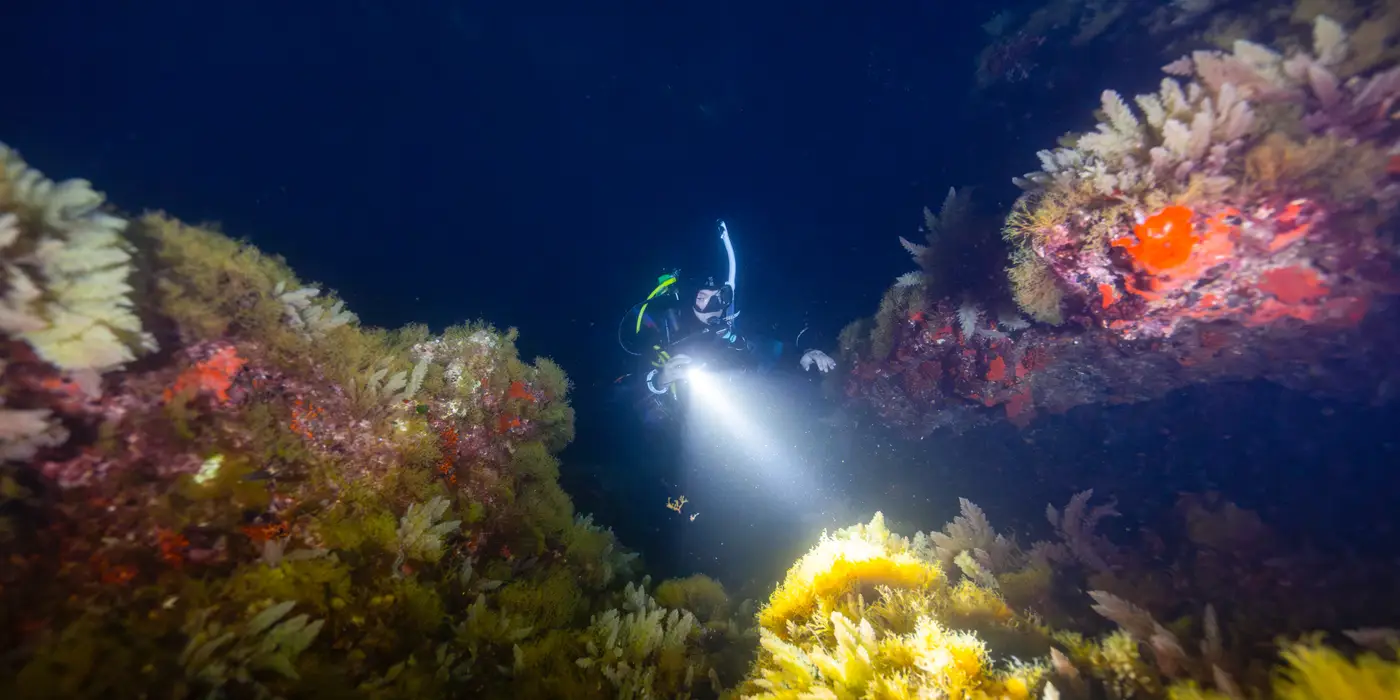
How do I signal at night?
- OK: a large circular motion with your light.
- Problem: quick side-to-side horizontal movements.
- Hand signals: shine your light on your hand so your buddy can read them.
Agree the signals with your buddy before you get in.
What equipment do I need?
A main light and a backup light — PADI calls two lights standard practice — and a small strobe or glow stick on your BCD so your buddy and the boat crew can spot you.
How do I avoid getting lost?
Review your navigation skills and the plan before entering, dive the plan, and tell someone your entry and exit times — exits are harder to find in the dark.
Frequently asked questions
Is night diving safe for new divers?
With a guide and a calm site it's a great experience; the Night Diver specialty teaches the skills.
Why not shine the torch at my buddy?
Bright beams can blind them — point it at your hand or at the reef.
Questions before you dive with us?
Message our team on WhatsApp — we're divers in Hurghada and happy to help.
Chat with us on WhatsApp