
Skills & Training
Out of air underwater: what to do, step by step
Running out of breathing gas is the most frequent trigger of emergency ascents — and entirely preventable, says Divers Alert Network. If it happens: reach your buddy and breathe from their alternate air source so you both ascend slowly on a continuous supply. With no buddy nearby, make a controlled emergency swimming ascent, breathing out continuously. Better: watch your gauge.
By 71 Guardians · Published 19 Oct 2026
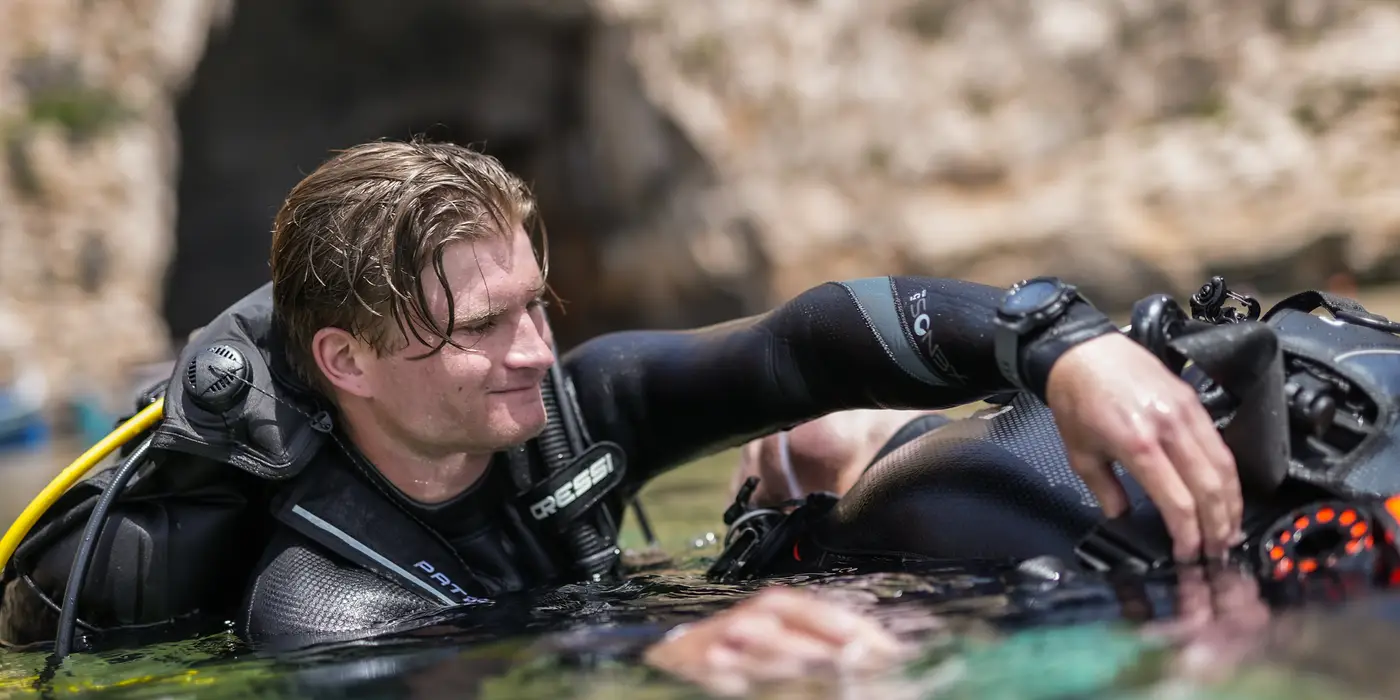
What are my options if I run out of air?
- Share air: signal your buddy, take their alternate air source and make a slow, controlled ascent together.
- Controlled emergency swimming ascent: if no buddy can help, keep your regulator in your mouth, breathe out continuously and ascend slowly.
How do I signal it?
A closed fist to the chest commonly means 'low on air'; a slashing motion across the throat means 'out of air'. Agree signals with your buddy before the dive.
How do I make sure it never happens?
- Plan each dive, check your gauge often and surface with a reserve.
- Know where your buddy's alternate air source is — that's part of the buddy check.
- Refresh air sharing with an instructor. DAN describes rehearsing emergency ascents by swimming horizontally in a pool; vertical ascent practice needs instructor supervision.
Frequently asked questions
How often does this cause accidents?
In DAN's review of 964 diving deaths, emergency ascents were involved in 30%, and running out of gas is the most frequent trigger.
What's buddy breathing?
Sharing one regulator — DAN found it in 8% of fatal emergency ascents; an alternate air source is the standard method today.
Questions before you dive with us?
Message our team on WhatsApp — we're divers in Hurghada and happy to help.
Chat with us on WhatsAppSources
- Emergency Ascents: Managing the Risks — Alert Diver — Divers Alert Network (DAN)
- What's That You Say? — Alert Diver — Divers Alert Network (DAN)