
Dive Health & Safety
PFO and diving: what a patent foramen ovale means for divers
A patent foramen ovale (PFO) is a small opening between the heart's upper chambers that didn't close after birth — about 27% of people have one. It can let bubbles from the veins reach the arteries. DAN figures put divers with a PFO at about 2.5 times the overall decompression sickness risk, while the 2025 SPUMS/UKDMC statement still advises against routine screening and recommends considering testing in specific higher-risk groups.
By 71 Guardians · Published 19 Oct 2026
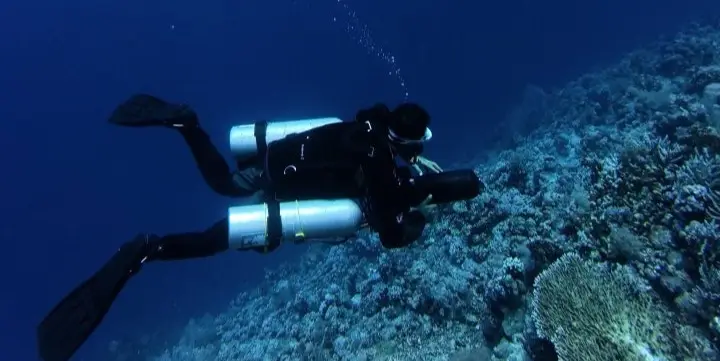
Why does a PFO matter for divers?
After most dives there are small bubbles in the veins, which the lungs normally filter out. A PFO can let some venous blood bypass the lungs, so bubbles may reach the arteries. DAN figures suggest about 2.5 times the overall decompression sickness risk and about four times the neurological risk — though the absolute risk is still low.
Should every diver be tested?
No. The 2025 SPUMS/UKDMC statement advises against routine screening. Consider testing after cerebral, spinal, inner-ear, cardiovascular or skin DCS, or with migraine with aura, unexplained stroke, PFO or atrial septal defect in a first-degree relative, or other congenital heart disease. A diving physician should assess the indication; testing uses bubble-contrast echocardiography with provocation manoeuvres.
What are the options if I have a PFO?
- Stop diving.
- Dive more conservatively — shorter dives well within no-stop limits, one dive a day, no heavy exertion for at least three hours afterwards.
- Consider PFO closure with specialists. Wait at least three months for repeat bubble-contrast echocardiography confirming adequate reduction or elimination of the shunt, and resume diving only once your treating specialist confirms that potent antiplatelet therapy is no longer needed; low-dose aspirin is acceptable under the statement. Closure does not eliminate all DCS risk.
Decide with a diving physician.
Frequently asked questions
How common is a PFO?
About 27% of people have one, according to the figures DAN cites.
Do I need a heart scan before learning to dive?
Not routinely — the 2025 SPUMS/UKDMC statement recommends considering testing for specific higher-risk groups with a diving physician.
Questions before you dive with us?
Message our team on WhatsApp — we're divers in Hurghada and happy to help.
Chat with us on WhatsAppSources
- Guidelines for Patent Foramen Ovale and Diving (DAN/UHMS workshop, 2015) — Divers Alert Network (DAN)
- Joint position statement on atrial shunts and diving: 2025 update — SPUMS / UK Diving Medical Committee, Diving and Hyperbaric Medicine