
Marine Life & Conservation
The story of the SS Thistlegorm: from 1941 sinking to iconic wreck
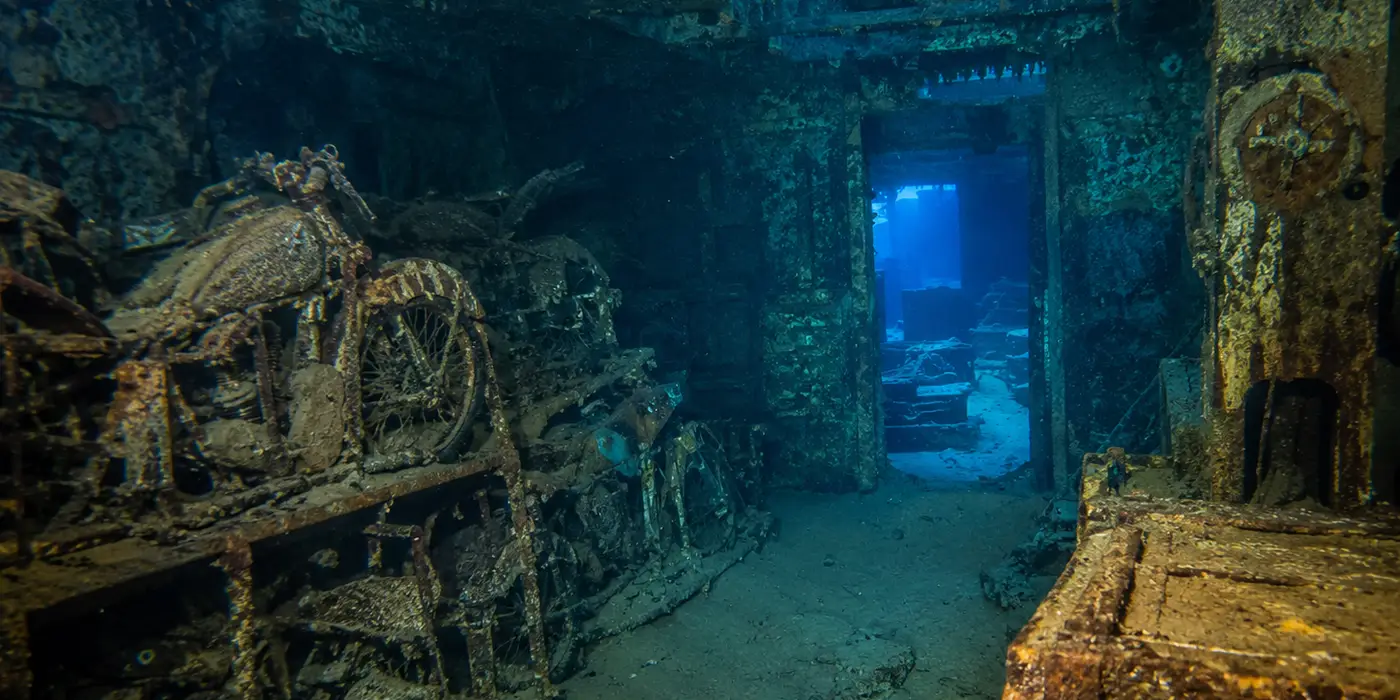
The SS Thistlegorm was a British cargo ship completed in 1940 and sunk on 6 October 1941, when German Heinkel He 111 bombers hit her hold while she waited at anchor in the northern Red Sea. Nine men died — four sailors and five gunners. Her cargo for Allied forces in North Africa, including motorcycles, trucks and two steam locomotives, is what divers see today at around 30 metres.
By 71 Guardians · Published 19 Oct 2026
Why was the Thistlegorm in the Red Sea?
She was carrying supplies for British forces in North Africa and had stopped at a safe anchorage because a collision in the Suez Canal had blocked the convoy's way to Alexandria.
How did she sink?
On 6 October 1941, two Heinkel He 111 bombers sent from Crete found the anchored ships. Two bombs hit hold 4, and the explosion of stored ammunition sank her. Four sailors and five gunners were killed.
What was she carrying?
Bedford trucks, Universal Carrier armoured vehicles, Norton and BSA motorcycles, Bren guns, ammunition, rifles, radio equipment, Wellington boots, aircraft parts, railway wagons and two steam locomotives carried on deck, which the blast threw to either side of the wreck.
When was she found?
Jacques Cousteau found the wreck in the early 1950s using information from local fishermen. Recreational diving on her grew from the early 1990s.
How do we dive it?
As a special day trip from Hurghada (extra charge) or on our North Wrecks & Reefs liveaboard — see our Daily Diving and Liveaboards pages.
Frequently asked questions
How deep is the Thistlegorm?
About 30 metres at its deepest.
Can you take souvenirs?
No — the wreck is a war grave and historic site. Look, photograph, and leave everything.
Questions before you dive with us?
Message our team on WhatsApp — we're divers in Hurghada and happy to help.
Chat with us on WhatsAppSources
- SS Thistlegorm — Wikipedia