
Skills & Training
Underwater photography for beginners: start with buoyancy
Good underwater photos start before you press the shutter: with buoyancy. PADI's own beginner tips put it first, because a diver who hovers steadily takes sharper photos and never lands on the reef. After that the biggest gains come from getting close to your subject — water steals colour and sharpness — and from patience with the marine life.
By 71 Guardians · Published 29 Oct 2026
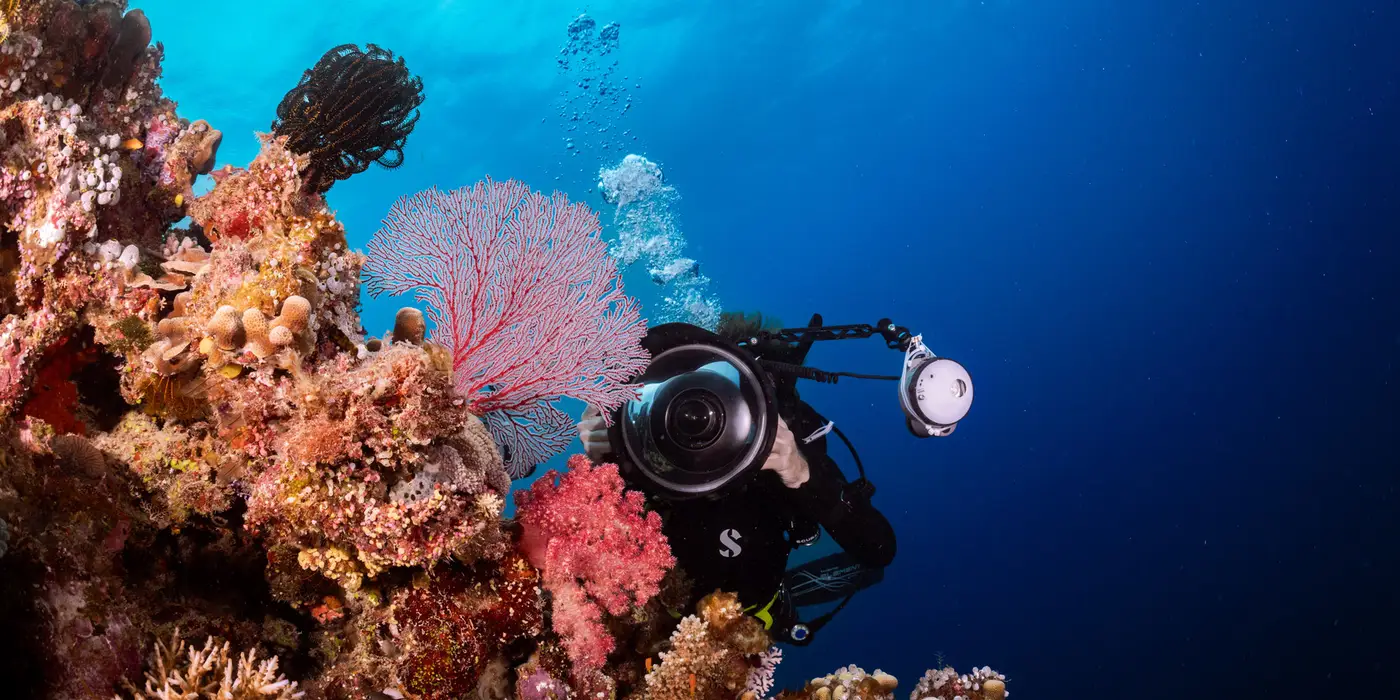
Why is buoyancy the first skill?
A camera is a distraction, and a distracted diver drifts, kicks up sand or touches coral. PADI recommends polishing your buoyancy — for example with the Peak Performance Buoyancy course — before you pick up a camera.
Why should you get close?
Water absorbs light and colour, starting with red, and every metre of water between you and your subject softens the picture. Getting closer — rather than zooming — gives brighter colours and sharper photos.
How do you photograph without harming the reef?
- Never hold on to, kneel on or move coral for a shot.
- Don't chase or corner animals; let them come to you.
- Keep your gauges and camera strap tucked in.
Where can you learn or rent a camera?
PADI's Underwater Photographer specialty is the next step. On our Daily Diving days you can rent a camera for €20 a day.
Frequently asked questions
What's the best first underwater camera?
A compact camera or action camera in a housing is plenty to start; master buoyancy and getting close first.
Why do my underwater photos look blue?
Water filters out red light; get closer, shoot shallower or use a light or a red filter.
Can I take photos on a try dive?
Your focus should be on the dive; our guides can take photos for you — ask when you book.
Questions before you dive with us?
Message our team on WhatsApp — we're divers in Hurghada and happy to help.
Chat with us on WhatsApp