
Skills & Training
Wreck diving safety: why you never go inside without training
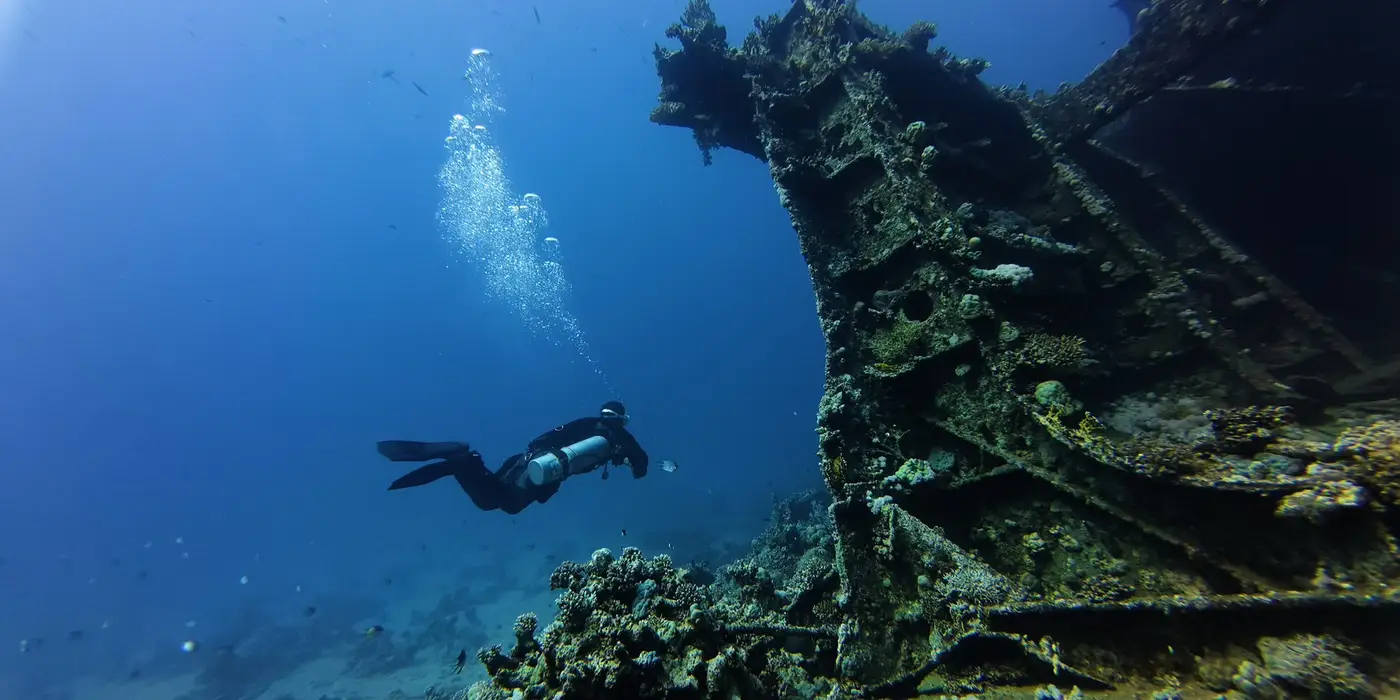
Swimming around a wreck is open-water diving; going inside is an overhead environment where you can't ascend straight up. Divers Alert Network lists the hazards: disorientation, collapse, silt-outs that drop visibility to zero, entanglement in cables and fishing line, and sharp metal. Get advanced wreck training, use a guideline reel, carry backup lights and plan gas to get out.
By 71 Guardians · Published 19 Oct 2026
What makes wreck penetration dangerous?
- Overhead environment: no direct way up to the surface.
- Disorientation: wrecks lying on their side or upside down make floors and doorways hard to read.
- Collapse: deterioration can block passages; rusted doors can trap a diver.
- Silt-out: fine silt stirred by fins or bubbles can wipe out visibility.
- Entanglement: fishing line, nets, cables and your own line.
- Sharp metal and contaminants: rusted edges, oils and other residues; wartime wrecks can be war graves.
What training and equipment do I need?
DAN advises advanced wreck training from a qualified professional before entering a wreck, a primary reel to lay a line out, strong primary and backup lights, and enough gas for the team to exit with a reserve.
Can I dive Red Sea wrecks without that?
Yes — most of a famous wreck like the Thistlegorm or the Abu Nuhas wrecks can be enjoyed from outside. Inside sections need the right training and guide.
Frequently asked questions
Is the Wreck Diver specialty enough to penetrate?
Follow your training's limits and your guide's plan; deeper penetration needs specific overhead training.
Why are some wrecks war graves?
Sailors died on wartime wrecks; DAN notes their remains are treated as war graves — look, don't take.
Questions before you dive with us?
Message our team on WhatsApp — we're divers in Hurghada and happy to help.
Chat with us on WhatsAppSources
- Hazards in Wreck Diving — Alert Diver — Divers Alert Network (DAN)