
Travel & Planning
Dolphin trips from Hurghada: how to choose one (private speedboat or group boat)
Choose a dolphin trip from Hurghada by who is on the boat and how the crew treats the dolphins. A shared boat runs on a fixed schedule with other guests; a private speedboat goes when you choose. Ours is €200 for up to six people, about 3 hours, to Dolphin House (Shaab El Erg). The dolphins are wild, so nobody can guarantee them, and a good crew never chases, crowds, touches or feeds them.
By 71 Guardians · Published 03 Nov 2026
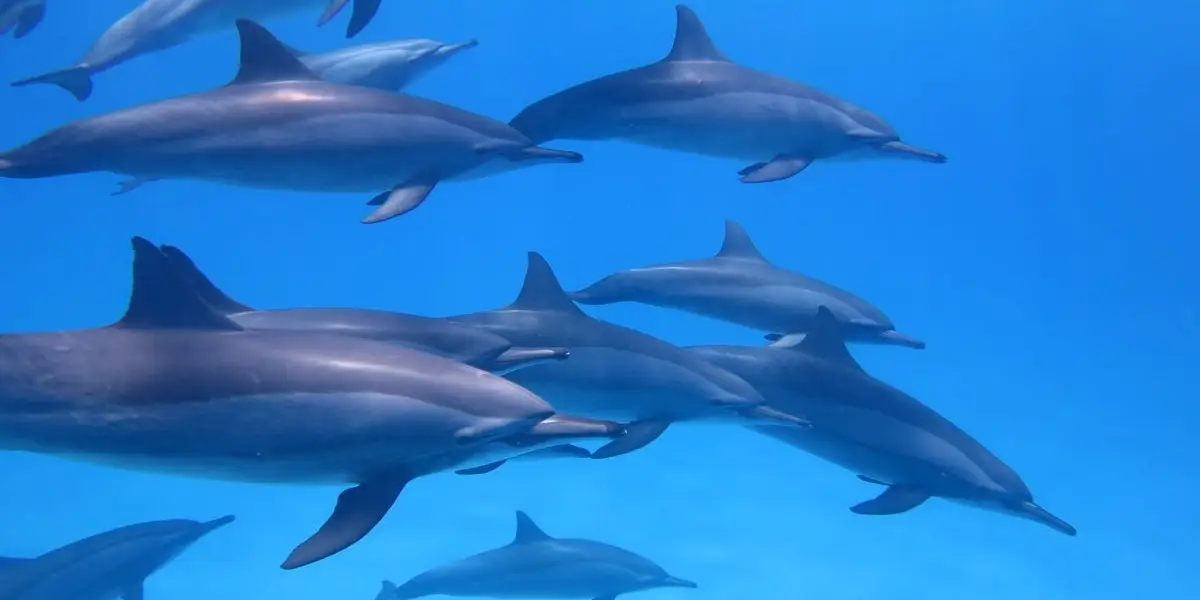
What kinds of dolphin trip can you book from Hurghada?
There are two main kinds: a shared boat that you join with other guests, and a private speedboat just for your group. Most trips go to Dolphin House (Shaab El Erg), a reef with a lagoon north of Hurghada. Our Dolphin House guide explains the site itself.
| Shared group boat | Private speedboat (ours) | |
|---|---|---|
| Who is on board | Your group plus other guests | Only your group, up to 6 people |
| Start time | The operator's fixed schedule | You choose it when you book |
| Time on the boat | Varies by operator — ask | About 3 hours |
| How the price works | Per person | €200 for the whole boat |
| Pickup | Varies — ask | Hotel pickup and drop-off in Hurghada included; other areas, ask us |
| Included | Varies — ask | Captain, mask, fins, life jackets, water and soft drinks |
| Best for | Solo travellers or couples happy to share | Families and small groups who want their own pace and timing |
With a private boat, the price per person falls as your group grows: €100 each for two people, €50 each for four, and about €34 each for six.
How likely are you to see dolphins?
Often, but never certainly: they are wild animals that come and go as they choose, and nobody can honestly guarantee them. HEPCA, the Red Sea conservation group, names Shaab El Erg, Fanous and Abu Nugar as places dolphins use mainly to rest. The Care for Dolphins programme, which has researched the dolphins off Hurghada and El Gouna since 2009, describes them as Indo-Pacific bottlenose dolphins.
- We could not find a published sighting rate for Dolphin House that we could check, so we don't quote one.
- On our trip, if the dolphins aren't there or don't want company, you snorkel the reef at Shaab El Erg instead.
- Be wary of any trip sold as "guaranteed dolphins": the only way to make that promise is to go looking for them hard, which is what the codes of conduct forbid.
What does a responsible dolphin trip look like?
A responsible trip lets the dolphins decide: the boat keeps its distance, waits, and you only get in the water calmly when they are near and relaxed. Two codes are used off Hurghada, and they set different distances:
| Rule | HEPCA code | Care for Dolphins code |
|---|---|---|
| Boat distance | At least 30 m | 200 m from 9 am to 12 pm (the dolphins' main sleeping time); 50 m at other times |
| Boat speed | Max 4 knots, or the speed of the slowest dolphin | Adapted to the slowest dolphin |
| Lagoons and resting areas | Boats never follow dolphins inside | No zodiacs in resting areas |
| Swimmers | Fins, mask, snorkel and a life jacket; enter gently | Life jacket, fins, mask, snorkel; slide in from a seated position; don't dive down |
The Care for Dolphins code also asks for a trained guide on board to brief guests, and says the number of boats on a reef is limited to the mooring buoys there: if all are taken, the boat should go to another reef. Research at a southern Red Sea resting reef found that where visits were zoned, most encounters were started by the dolphins; at an unregulated reef nearby, boats and swimmers approached them closely, sometimes for up to 9 hours a day. The full list of rules is in our dolphin code of conduct article.
What are the red flags on a dolphin trip?
The clearest red flag is a boat that speeds after the dolphins or cuts across their path. Others to watch for:
- Chasing or circling: boats that surround a group instead of staying on one side, one behind the other, with an escape route left open.
- Crowding: a pack of boats around the same group of dolphins, or boats tied to the reef when there is no mooring buoy free.
- Jumping and diving down: crew telling everyone to jump in at once, or encouraging swimmers to dive down towards the dolphins.
- Touching or feeding: both are banned under the codes; touching can pass disease between people and dolphins.
- Noise: music, shouting, whistling or clapping near the dolphins.
- No life jackets, no briefing: every swimmer should be given a life jacket and told the rules before getting in.
If the dolphins slap their tails, suddenly change direction or speed up, those are signs of distress, and the boat should leave slowly. Breaking HEPCA's code is punishable by law with a fine. The Care for Dolphins leaflet asks people who see violations to report them to the Red Sea Marine Parks Authority.
Do you need to swim, and can children come?
You need to be comfortable in the water, but you don't need to be a strong swimmer, and you can watch from the boat. Both codes say every swimmer wears a life jacket, fins, mask and snorkel, which also keeps you floating with little effort.
- No experience is needed for our trip, and life jackets are on board.
- Children can join with their family; tell us their ages when you book, and keep a non-swimming child next to an adult in the water.
- In winter, bring a light jacket for the speedboat ride.
New to snorkeling? Read our snorkeling safety tips for first-timers and weak swimmers before you go.
What is the difference between a wild dolphin trip and a dolphin show?
A wild dolphin trip takes you by boat to free-living dolphins in the sea; a dolphin show or "swim with dolphins" session takes place in a pool with captive dolphins. Excursion lists sometimes mix the two, so check whether the listing mentions a boat and Shaab El Erg or a show, a pool or a photo session.
- We only run trips to wild dolphins in the sea. We never sell tickets to dolphinarium shows or captive swim sessions.
- The animal-welfare charity World Animal Protection says captive dolphins face "a lifetime of confinement in concrete tanks or small sea pens" and urges travellers to choose experiences where animals stay in their natural habitat. That is the charity's position.
- ABTA, the UK travel association, advises that where swimming with dolphins is allowed, you let them approach you when they choose to.
What should you ask before you book a dolphin trip?
Ask five things: who else is on the boat, what time you go, what happens if there are no dolphins, what is included, and how you pay and cancel.
| Question | Our answer |
|---|---|
| Is the boat private or shared? How many guests? | Private: only your group, up to 6 people |
| What time do we go? | You choose the start time when you book |
| What if the dolphins aren't there? | You snorkel the reef at Shaab El Erg; we never chase them to find them |
| What's included? | Speedboat and captain for about 3 hours, hotel pickup and drop-off in Hurghada, mask, fins, life jackets, water and soft drinks |
| Do we follow a code of conduct? | Yes: we never chase, surround or block them, and no touching or feeding |
| How do I pay? | Cash on the day; nothing in advance |
| Can I cancel? | Free up to 24 hours before. If we cancel for weather or sea conditions, you pay nothing and we rebook you |
See the private speedboat dolphin trip, all our boat trips, or the live price list. If you'd rather spend a full day on the reefs, the snorkeling trip is €35 with hotel pickup, lunch, mask and fins.
Frequently asked questions
How much is a dolphin trip from Hurghada with 71 Guardians?
€200 for a private speedboat for up to 6 people, about 3 hours, with hotel pickup in Hurghada, mask, fins, life jackets and drinks. That is about €34 each for six people.
Are dolphins guaranteed at Dolphin House?
No. They are wild and come and go as they choose; if they aren't there, you snorkel the reef at Shaab El Erg.
What time is best for a dolphin trip?
The Care for Dolphins code treats 9 am to 12 pm as the dolphins' main sleeping time and asks boats to keep 200 m away then. On our private trip, you choose the start time.
Can I touch or feed the dolphins?
No. Both codes used off Hurghada ban touching and feeding, and breaking HEPCA's code can be punished with a fine.
Do I need to be a good swimmer?
No, but you should be comfortable in the water. You wear a life jacket, and you can also watch from the boat.
Do I pay in advance?
No. You pay cash on the day, and cancellation is free up to 24 hours before.
Do you sell dolphin show tickets?
No. We only take guests to see wild dolphins in the sea, never to dolphinarium shows or captive swim sessions.
Questions before you dive with us?
Message our team on WhatsApp — we're divers in Hurghada and happy to help.
Chat with us on WhatsAppSources
- Dolphin Code of Conduct — HEPCA (Hurghada Environmental Protection and Conservation Association)
- Care for Dolphins and Code of Conduct (leaflet, downloadable from this page) — Dolphin Watch Alliance
- Behavioural responses of spinner dolphins to human interactions (Fumagalli et al. 2018, Royal Society Open Science 5: 172044) — Royal Society Open Science / PubMed Central
- Advice for travellers on activities involving animals — ABTA
- Captive dolphin tickets news, 3 November 2025 — World Animal Protection