
Marine Life & Conservation
Oceanic whitetip sharks in the Red Sea: what divers should know
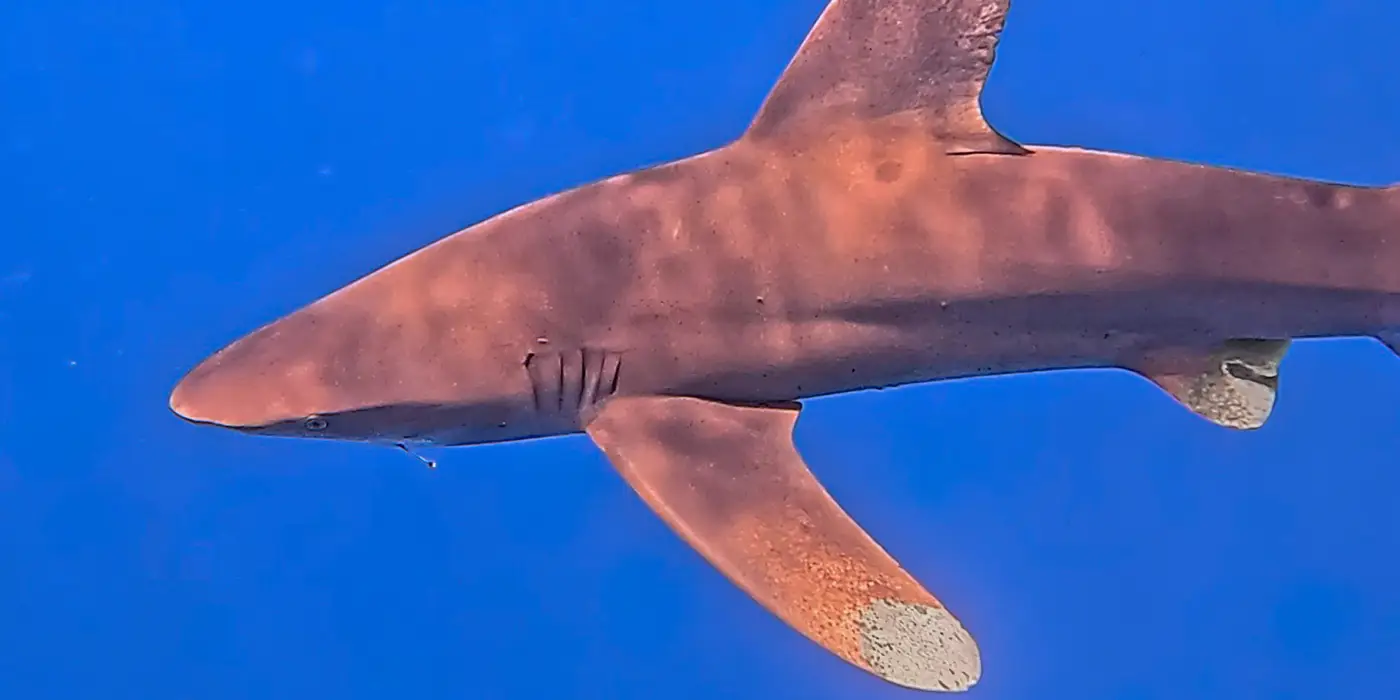
Oceanic whitetip sharks are seen at the Red Sea's offshore reefs such as the Brothers, Daedalus and Elphinstone. They are listed as Critically Endangered on the IUCN Red List (2019). HEPCA, Egypt's leading marine conservation NGO, advises divers to stay calm, avoid sudden movements, stay near the reef, descend promptly and never feed or touch sharks — feeding them is illegal in the Egyptian Red Sea.
By 71 Guardians · Published 18 Oct 2026
Where do divers see oceanic whitetips in the Red Sea?
Mainly at the offshore marine parks reached by liveaboard — the Brothers, Daedalus and Elphinstone. We say 'a chance' rather than a promise: they are wild animals.
How should I behave around an oceanic whitetip?
HEPCA's advice for divers (as published in 2010) includes:
- Feeding or baiting sharks is illegal in the Egyptian Red Sea — don't enter the water if it's happening nearby.
- Only enter if you're comfortable and can stay calm.
- Sharks are generally more hesitant to approach groups of divers than individuals.
- Avoid sudden, jerky movements; leave the water calmly and in order.
- Avoid rapid ascents, especially with a shark below you.
- You're most vulnerable at the surface — descend promptly after entering.
- Stay near the reef rather than in open water.
- Don't touch or harass sharks or block their way out.
- A calmly circling shark isn't a cause for alarm — turn with it and keep it in sight.
- Keep looking around: sharks may approach from behind, below or above.
Is snorkelling with oceanic whitetips safe?
HEPCA has called letting guests snorkel at St John's and other far islands while oceanic whitetips are present 'highly unprofessional', because it puts guests at risk.
Why are oceanic whitetips endangered?
The IUCN moved the species from Vulnerable to Critically Endangered in 2019, citing steep population declines in all oceans — more than 90% over three generations in some regions. Fishing is the main pressure. Seeing one in the Red Sea is a privilege worth protecting.
Frequently asked questions
Are oceanic whitetips dangerous?
They are large, curious open-water sharks and incidents have happened in the Red Sea, so divers follow HEPCA's guidelines. Calm, grouped divers near the reef is the standard practice.
When is the best time to see them?
They're wild, so no one can promise a sighting. Ask us about the offshore liveaboard routes and their seasons.
Questions before you dive with us?
Message our team on WhatsApp — we're divers in Hurghada and happy to help.
Chat with us on WhatsApp